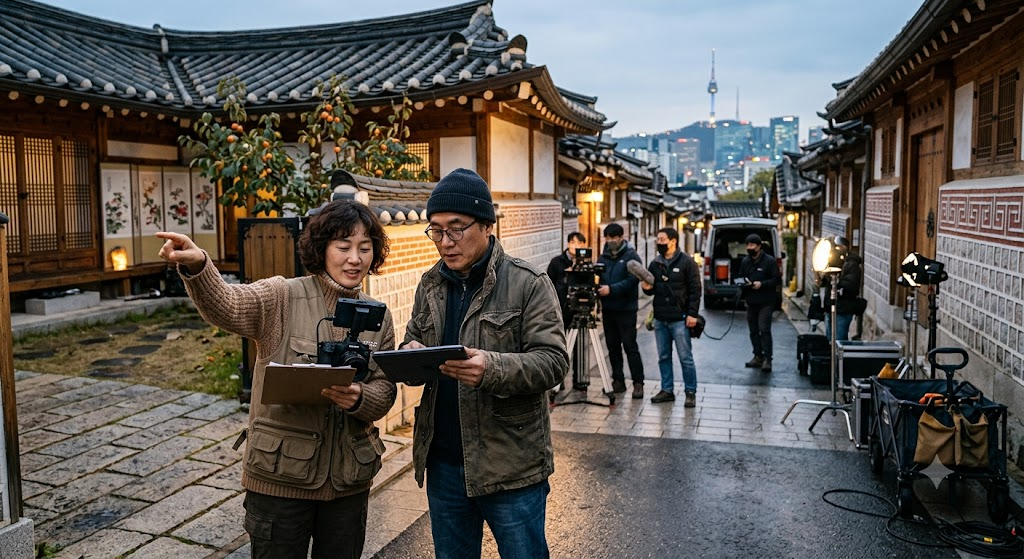
Few cities offer such sharp contrasts within a short drive: ancient palaces beside glass towers, quiet mountain paths minutes from neon streets. That variety is a gift to filmmakers, but only if the location suits the story. Here is a guide to thinking about Seoul as a set.
Palaces and Heritage Sites
Royal palaces such as Gyeongbokgung offer stone courtyards, painted wooden eaves and dramatic gates. They suit period drama, cultural documentaries and any story about tradition meeting modern life.
Remember that heritage sites usually have rules about filming, equipment and opening hours. Request permission early, explain exactly what you plan to shoot, and be ready for restrictions on tripods, drones or crew numbers.
Hanok Villages and Old Lanes
Neighbourhoods with traditional hanok houses carry warm timber, tiled roofs and narrow lanes that photograph beautifully. They are ideal for intimate scenes, quiet conversations and reflective montages.
Many of these areas are also places where people live. Keep noise low, avoid blocking doorways and ask residents politely before filming near their homes. Respectful crews are remembered, and those who are not get shut out.
The Han River and Its Parks
The river runs through the heart of the city, with wide paths, bridges and open skies. Joggers, cyclists and evening picnics make it a lively backdrop for scenes about daily life and relaxation.
Light changes beautifully across the water at dusk. Plan your timings carefully, because the best minutes pass quickly, and crowded weekends can make clean shots difficult without careful framing.
Neon Streets and Night Scenes
After dark, districts full of signs, screens and street food stalls create a vivid, energetic mood. They are perfect for music videos, youth stories and anything that wants to feel contemporary.
Night shoots need extra planning for power, lighting and transport. A local fixer South Korea productions trust can arrange access, negotiate with shop owners and keep the crew safe in busy, noisy areas.
Markets and Everyday Life
Traditional markets such as Gwangjang overflow with steam, colour and conversation. They tell stories about food, family and community in a way that few staged sets can match.
Ask stallholders before filming, and buy something while you are there. A small courtesy opens smiles, and people who feel respected will often show you details that outsiders would never have discovered.
Beyond the Capital
Within a couple of hours of Seoul lie mountains, coastlines, farmland and quiet villages. These settings give variety without the pressure of city traffic and crowds.
Travel time must be built into the plan, as well as accommodation and permissions. Complete film production services can handle vehicles, scouting trips and local contacts, so the crew arrives ready to film.
Scouting Properly
Never choose a location from photographs alone. Visit at the time of day you intend to film, listen to the sound, check power and parking, and take your own pictures from your planned angles.
A good scout notes where the sun will be, where people will pass and where the nearest toilet is. These dull details decide whether a location is a pleasure or a headache.
Keep a Backup Ready
Weather, closures and surprise events can cancel the best plan. Always identify a second option for each important scene, preferably within the same area so the crew can move quickly.
A backup does not need to be perfect; it simply needs to keep the day alive. Many productions have found that the unplanned alternative produced the most memorable shots of the whole shoot.
Sound and Atmosphere
A location can look wonderful and sound terrible. Traffic hums, subway announcements, construction drills and shop music can all ruin dialogue, even when the picture is perfect.
Listen carefully during your scout, wearing headphones if you can. Record a minute of ambient sound at the exact spot, then decide whether the scene needs a quieter corner or a later hour.
Think About Crowds and Timing
Popular places fill quickly, especially on weekends, holidays and during festivals. A scene that looks peaceful in your plan can turn into a shuffle through tourists and school groups.
Visit at dawn or on a weekday morning when possible. Early light is gentler, streets are quieter, and staff at many venues are happier to help before the busy rush begins.
Conclusion
The right location supports the story without competing with it. Scout carefully, respect the people who live there and prepare more than one option.
To see how Seoul has been used as a backdrop in finished productions, browse posted-productions.com.